Citizen Services & 311
Citizen Services & 311
Every call, routed. The request stays with the resident from the first ring to the public reply.
The problem
Calls, counter visits and portal reports often land in different places. After hours, the urgent ones need a person who is actually on call. The resident then asks for an update that nobody can see.
The workflow
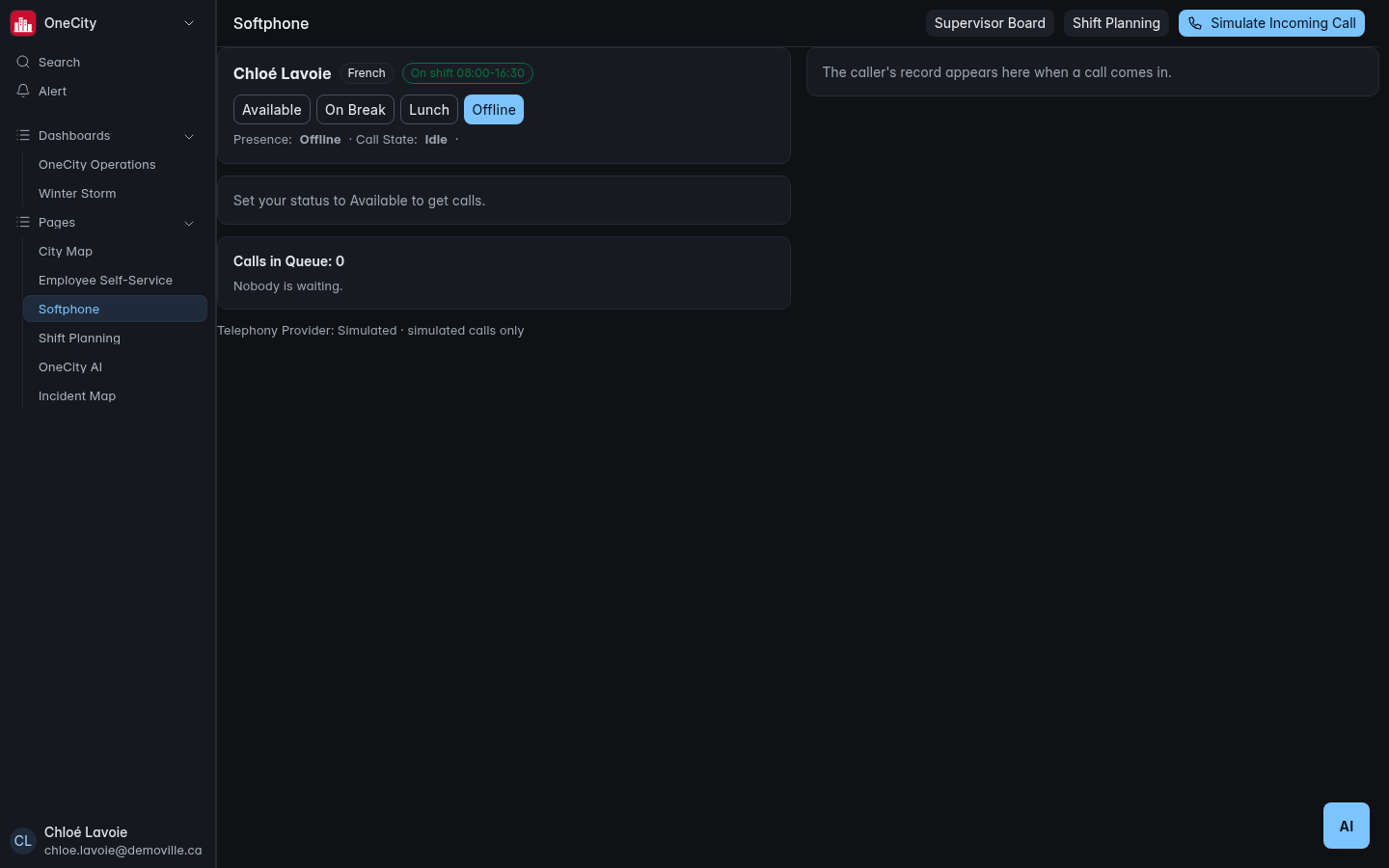
While the queue is staffed, an inbound call goes to an available agent who is on shift. A French call prefers the French-skilled agent who has been free the longest. After hours, the call goes to the person on call. The softphone shows that caller's open service requests.
Each division has working hours, a daytime owner group and an after-hours group. A problem type marked urgent goes to the after-hours group. Road deadlines follow the province. In Ontario, Ontario Regulation 239/02 is the clock the incident map can turn red.
On screen
Capabilities
Service Request Management
Every call, routed.
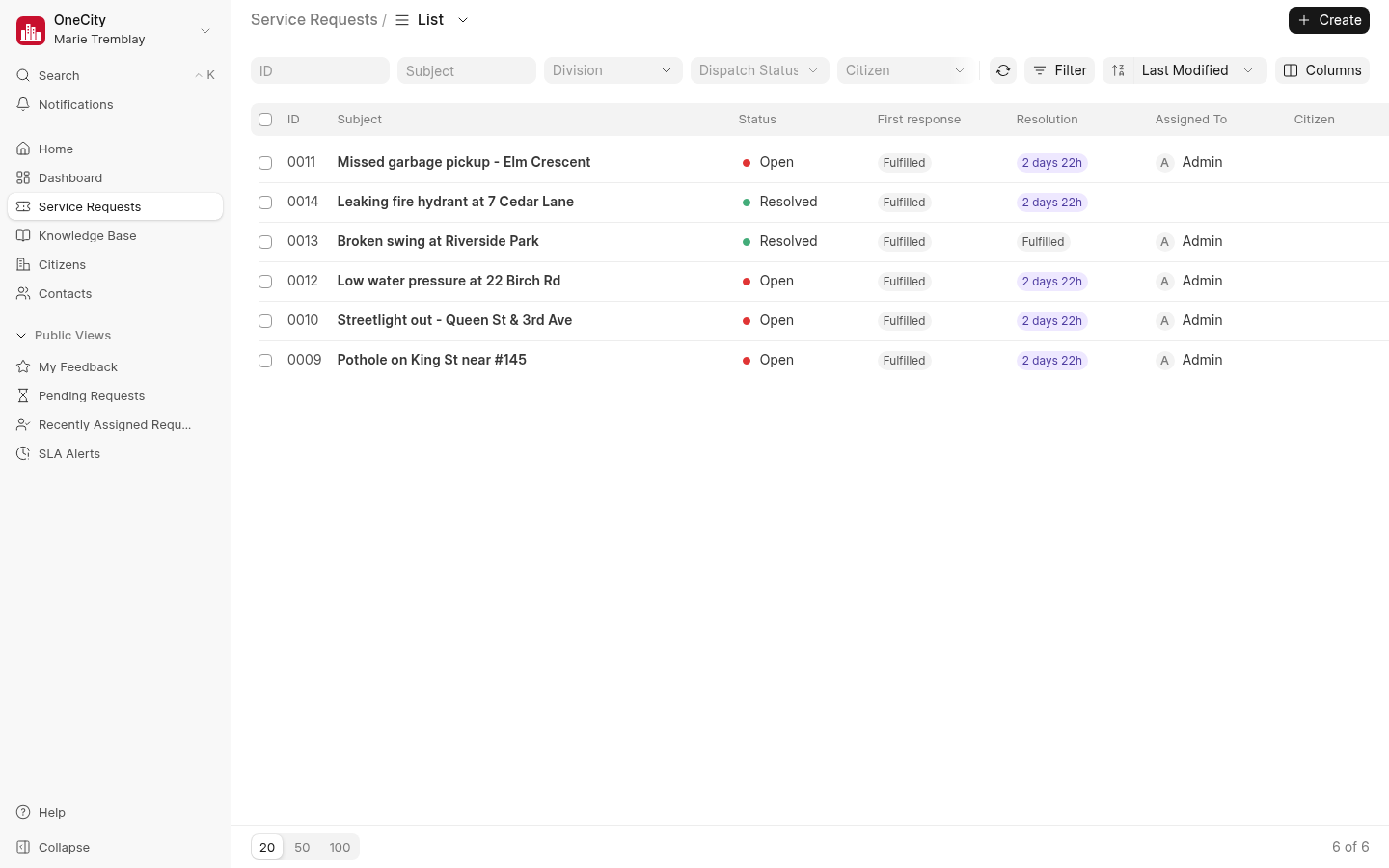
Categories, priority, status and the division that owns the request. Public replies are the ones the resident can read.
Division hours
The right group, for the hour.
Working hours, owner groups and the on-call crew decide where a new request goes.
Resident portal
The public side.
A resident reports a problem with a category, a description, a photo and a map pin, then follows progress.
Integrations
The softphone sits on the desk. Email carries the notices a municipality configures. A request that becomes project work can stay aligned with Jira. The phone-platform region defaults to Canada Central.