Utilities & Community Services
Utilities & Community Services
Meters, rooms and permits, on the same resident record.
The problem
Water bills, rink times and building permits each have a counter of their own. The resident has one address.
The workflow
A service point has meters and readings. A rate plan charges a fixed amount plus tiers of cubic metres, and wastewater as a percentage of water or as its own rate. A billing run creates one bill per service point and posts it to the water and wastewater fund. Where the province allows it, an overdue utility charge can move onto the property tax roll. In Ontario, that path follows the Municipal Act, 2001.
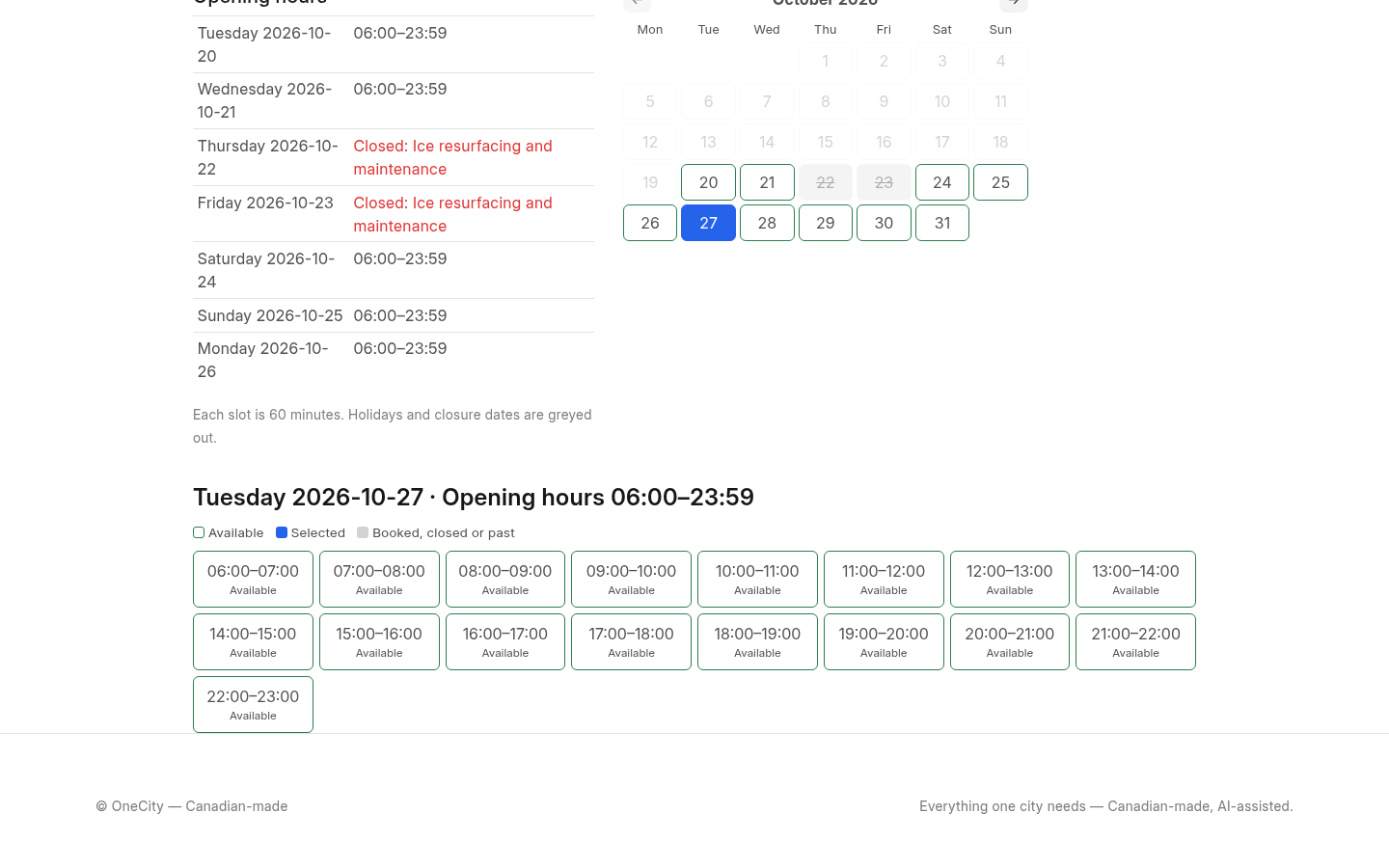
A facility has opening hours, a slot length, and rates by renter class. The resident picks a free slot. Staff still confirm the booking. A permit runs from submission through review, a decision, issue, inspections and close.
On screen
Capabilities
Water utilities
The meter, then the bill.
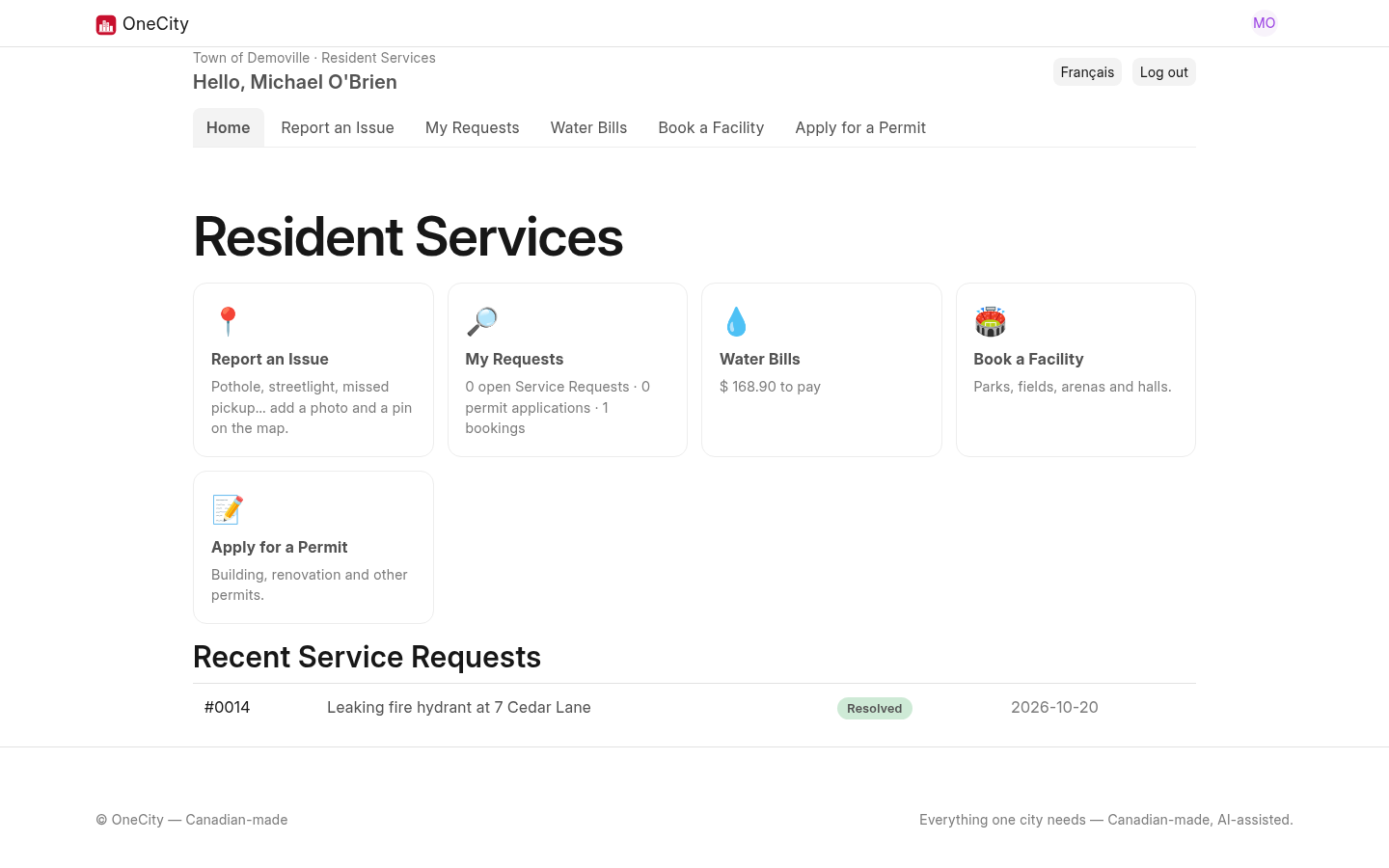
Service points, readings, rate plans and a billing run that posts to the water fund. The portal shows the bills for the accounts linked to that person.
Recreation
One free hour.
Slots are free, booked, closed or past. The server checks the choice again under a lock. A seasonal allocation covers a weekly pattern on one invoice. HST follows the facility. A damage deposit posts to a liability.
Permits
From the form to the inspection.
Building, demolition, plumbing and sign permits, and business licences. Each type sets the fee rules, the documents and the inspection stages. Residents start on a public form and follow the file from the portal.
Integrations
Utility bills and facility charges post to the ledger. An approved payment can run through the payment processor sandbox. Email notices follow the booking or the permit stage.